
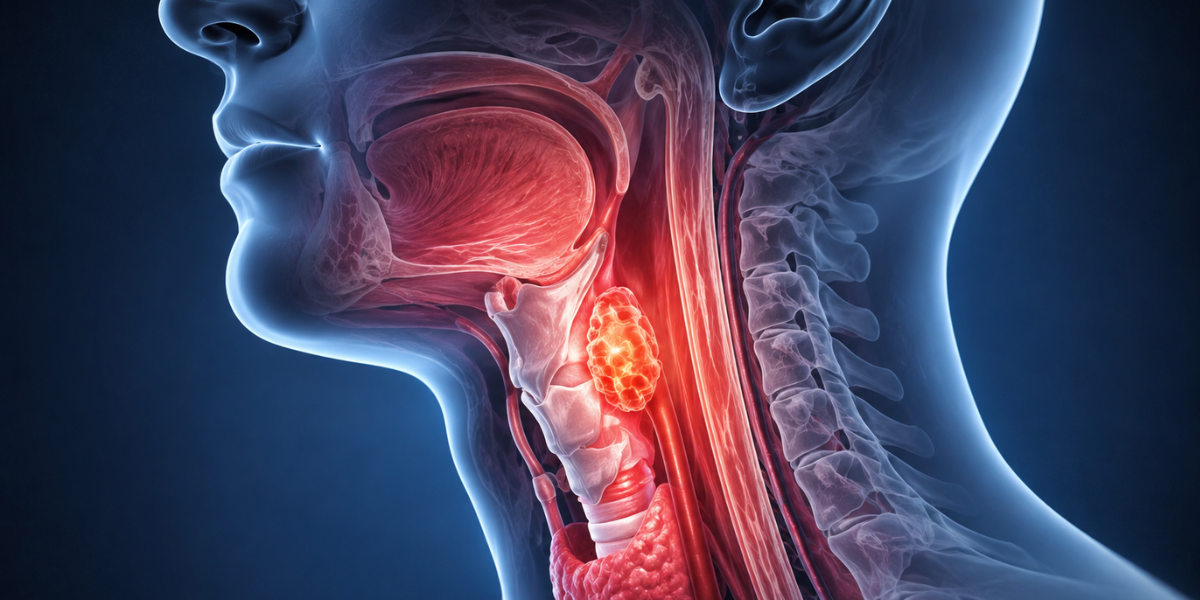
Throat cancer can place immense mental stress on patients while creating difficulties with essential functions such as speech, swallowing, as well as breathing. If detected early, oncologists can identify the spread of the cancer and prepare one or more treatment methods for the quickest recovery.
Through this blog, let us take you through how throat cancer is diagnosed and treated at a specialized center and how multidisciplinary care supports patients and their families throughout the treatment journey.
Throat Cancer Diagnosis At A Specialized Center
Early throat cancer diagnosis allows the patient’s cancer to be controlled and the spread to be halted before it progresses to advanced stages and spreads to other organs. In its early stages, throat cancer treatment can lead to successful recoveries.
A multidisciplinary team at a specialized center for throat cancer treatment uses advanced tools and techniques to detect even a minor presence of cancer, allowing them to accurately diagnose and start treatment.
Some of the diagnostic methods include:

1. Physical Examination By An ENT Specialist
The first step in diagnosis starts with an ENT specialist examining the patient. The examination by an ENT specialist consists of inspecting the mouth, throat, and neck for any abnormalities, swellings or lumps, and enlarged lymph nodes.
2. Laryngoscopy/Nasopharyngoscopy
An endoscopic examination is recommended by an ENT specialist if they suspect throat cancer based on your symptoms or physical examination.
a. Flexible Nasopharyngoscopy.
An ENT specialist inserts a thin and flexible camera through the nose to examine the nasal passages, throat, as well as the surrounding areas for abnormalities or suspicious tissue changes.
b. Laryngoscopy
A laryngoscopy uses a scope to directly examine the voice box and the surrounding throat areas. During some laryngoscopic procedures, a biopsy can also be taken from the throat area for examination.
3. Imaging Tests
Imaging tests help the multispecialty team understand the tumor size and its location. It also helps them understand if the abnormal cells have spread to the nearby lymph nodes or surrounding areas.
a. CT Scan
A CT scan identifies the size of a tumor by creating detailed images of the area. It also helps in identifying the spread of the cancer to the surrounding lymph nodes and organs.
b. MRI Scan
An MRI scan provides even more detailed images of the soft tissues of the throat, which helps oncologists better understand the spread of the tumor to nearby tissues.
c. PET Scan
A PET scan is used to detect active cancer cells in the throat area. It shows whether the cancer has spread beyond the site of occurrence and also helps oncologists look for recurrence and treatment progress.
4. Biopsy
Biopsy is when a small tissue sample is taken from the throat area and sent to a pathologist for examination for the presence of cancer cells. A biopsy is the most important test to confirm the presence of cancer, and it can be conducted independently or during a laryngoscopy.
5. HPV Testing
Oncologists suggest HPV testing for certain throat cancer subtypes, like oropharyngeal cancer. If confirmed, it helps oncologists in planning the right treatment path for oropharyngeal cancer.
Treatment Options At A Specialized Throat Cancer Center
Once throat cancer is diagnosed and its stage is confirmed, the treatment is selected based on individual patient factors. The patient’s cancer may be treated with one or a combination of treatments depending on the location and stage of the cancer.
1. Surgery
Surgery is the most effective for patients with the early stages of throat cancer. It may also be used as a combination procedure with other therapies in later stages. The surgeon removes the tumor along with the affected lymph nodes and tissues while maintaining the functions of speech and swallowing if possible.
2. Radiation Therapy
Radiotherapy involves using radiation to kill cancer cells in order to treat the patient. This therapy is of utmost importance in the case of throat cancer as it precisely targets the cancer cells present in the throat region while sparing the remaining healthy cells as much as possible in order to avoid any significant loss of the normal functions of speech or swallowing.
There are two major types of radiation therapy used by specialized centers:
a. Internal Radiation Therapy
Internal radiation therapy is given to throat cancer patients by placing radioactive material right next to or into the tumor. It is further classified as Brachytherapy and Intraoperative Radiation Therapy (IORT).
b. External Radiation Therapy
External radiation therapy is the most common type of treatment where machines use high-energy rays to target and eliminate cancer cells within the throat.
3. Chemotherapy
Chemotherapy is drug-based cell elimination for throat cancer. It is given orally or via injection/catheter for throat cancer patients.
4. Targeted Therapy
Targeted therapy is a kind of medical treatment that blocks the proteins responsible for cancer cell growth using certain drugs. It may be considered for certain throat cancers based on the specific characteristics of the tumor.
5. Immunotherapy
Immunotherapy uses drug combinations that help the immune system recognize and attack cancer cells. It may be used for certain advanced or recurrent throat cancers depending on the characteristics of the tumor and the patient’s previous treatment.
6. Supportive Care
Specialized throat cancer hospitals provide supportive care in the form of:
- Side effect management during treatment
- Palliative care
- Pain relief
- Counseling and emotional support to the patient and their family
- Restoration of speech and swallowing
- Routine checkups for recurrence
- Physical health assessment
- Nutrition and diet planning
Supportive care is offered to the patient before, during, and after the treatment.
Conclusion
Before you start your treatment at a specialized throat cancer hospital, the multispecialty team needs to detect it at early stages in order to effectively treat it. Early detection of throat cancer starts with identifying symptoms that last for weeks, like hoarseness, throat irritation when speaking or swallowing, sore throat, pain in the ear region, and lumps in the neck region. If you notice these symptoms for more than 3 weeks and they show no change with routine medicines, a visit to a specialized hospital for diagnosis becomes vital.
At a specialized throat cancer center, a standard approach of specialist examination, endoscopy, imaging, and biopsy enables appropriate diagnosis and treatment. Early evaluation followed by individualized treatment and supportive care is critical in ensuring that patients receive comprehensive cancer care.