
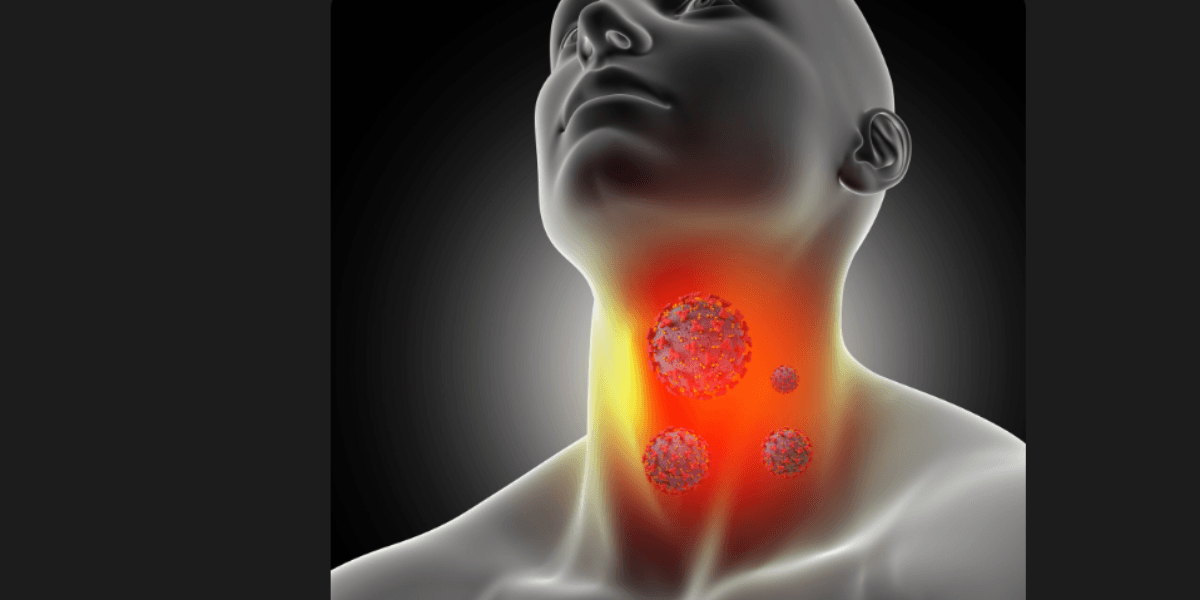
Throat cancer treatment is being transformed leaps and bounds by the research on new treatment types in treatment centers. From minimally invasive surgeries that are assisted by robots to Artificial intelligence based diagnoses and new immunotherapies, next-generation healthcare centers are offering faster, safer, and better-quality patient care. The technologies not just boost survival but also the quality of life through reduced side effects.
Types Of Advanced Technology Treatments For Throat Cancer
1. Amivantamab
Amivantamab, a triple-action smart jab, has been shown to significantly shrink head and neck cancer tumours within six weeks, offering hope for patients whose disease has returned after standard therapies. The drug blocks two key cancer pathways, EGFR and MET, while boosting the immune system’s attack on cancer cells. Delivered as a quick injection, under your skin, amivantamab is faster and more convenient than traditional treatments, marking a major advancement in minimally invasive cancer therapy.
2. Keytruda
A new drug treatment of 3 compounds for head and neck cancer combines immunotherapy (Keytruda), the blood pressure drug losartan (Cosaar), and stereotactic body radiation therapy (SBRT). The treatment is meant to activate the immune response and more effectively target faster-growing and difficult-to-treat cancer in delicate areas of the mouth and throat. Losartan inhibits the TGF-β protein that dampens the body’s immune defense system so that the immunotherapy can be more effective.
3. Transoral Robotic Surgery
This new robotic technology is changing throat and oral cancer treatment at cancer treatment centers. Doctors at throat cancer treatment centers can remove oropharyngeal cancer from patients without the help of chemotherapy or radiation, thanks to Transoral Robotic Surgery (TORS) and the Da Vinci SP. The minimally invasive surgery enables physicians to accurately remove cancers from distant parts of the body through the mouth, hence quick recovery, low possibility of complications, and improved quality of life.
4. Cell Squeeze Technology
A new cell therapy eliminates HPV-induced head and neck cancers using microfluidic Cell Squeeze technology. It immunizes patients’ own immune cells (PBMCs) to destroy and kill HPV16-positive cancer cells without genetic engineering. Reprogrammed cells are re-administered into patients with excellent anti-tumor activity and low side effects. This strategy is rapid, accurate, and non-chemotherapy, non-immunosuppression based, a significant advancement in personalized, low-toxicity cancer treatment.
Types Of Advanced Technology Diagnosis For Throat Cancer
1. Voice Scan
AI-powered apps can detect laryngeal (throat) cancer early by analyzing a patient’s voice. With deep learning algorithms that are trained on thousands of voice samples, the technology is highly accurate in detecting small voice changes that signal cancer. Doctors at throat cancer treatment centers can record and analyze a patient’s voice in five minutes and immediately receive the results via the apps.
2. Cellular Imaging
A single-cell imaging technique is used for head and neck cancers that predicts therapy response. Using machine learning and spatial analysis, hundreds of patient samples are analyzed to create cellular fingerprints, identifying two new patient groups: one with excellent outcomes and another with poor prediction linked to EGF-mediated signaling. This allows personalized treatment from surgery alone to aggressive therapies.
Conclusion
Advances in throat cancer treatments are transforming the patient experience with precision medicine, robotics, artificial intelligence, and new drugs to achieve quicker diagnoses and safer, more efficient treatments. With research and clinical trials going on around the clock, patients have a new hope that not only cures them but also reduces the side effects by a great margin.