
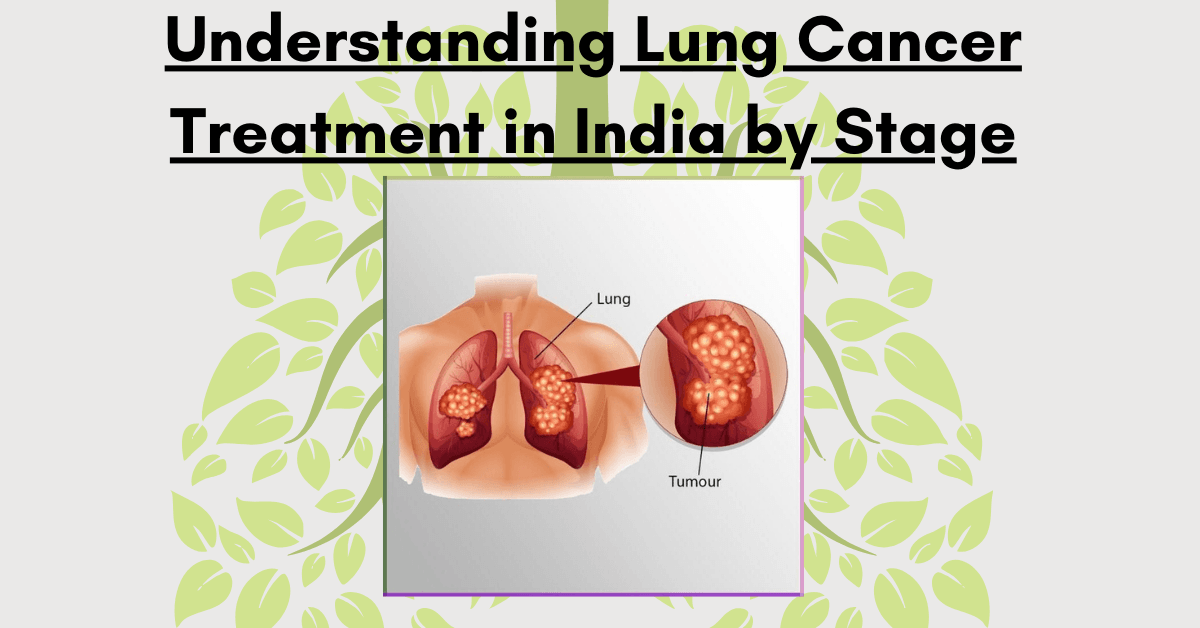
Lung cancer treatment is different for each patient as the progression and response to treatment vary. Doctors have divided the severity of lung cancer into 4 stages, with the later stages having progressed farther in the body. The stages then define which treatment type will be more affective ranging from surgery to chemotherapy, radiation therapy, and more. So, in this blog, let us take you through the condition of lung cancer in each stage and the different types of treatment used to treat it.
The Four Main Stages of Lung Cancer And Their Treatment In India
Stage 1: Early and Localized
In the early stage 1 of lung cancer, the cancerous cells stay limited within the lung tissue. A small tumor forms but remains limited – no movement into surrounding areas yet. Lymph nodes near the lung show no signs of involvement; distant organs are unaffected.
Treatment options work best at this point due to the minimal reach of the disease. Usually, surgery stands as the first step when removing abnormal tissue. Afterward, treatment continues with radiation or targeted therapy to reduce recurrence risks. When lung cancer appears in its earliest phase, survival rates rise noticeably.
Stage 2: Spread to Nearby Areas
Now beginning at stage two, the disease remains inside lung tissue, though reaching adjacent lymph nodes. More advanced compared to stage one, yet medical care can make a difference.
Surgery typically removes both the growth and the involved nodes. Following this procedure, treatment plans frequently include chemo or radiotherapy. Even after initial therapy, leftover cancer cells may persist – certain follow-up treatments aim to eliminate them, reducing the chances of it returning.
When care begins early and follows medical guidelines, a significant number of individuals show a strong improvement, later resuming normal daily routines even at stage 2.
Stage 3: More Advanced Spread
Progression defines stage 3 lung cancer, with growth extending inside the chest cavity. Often, it involves additional lymph nodes or structures like airways or pleural tissue. Classification splits this stage into subgroups – 3A, 3B, and 3C – based on extent.
Complexity increases when managing care during these stages. Sometimes chemotherapy pairs with radiation, depending on the case. Surgery remains an option now and then – though it does not work for everyone. Cancer care progresses with reducing tumors, easing symptoms, and slowing the overall progression of cancer.
Stage 4: Final Stage
Stage 4 is the last stage of cancer disease, as it means the cells have progressed beyond the organ to the surrounding ones. Beyond the lungs, it moves into areas such as the brain, liver, bones, or adrenal glands. Once that shift takes place, doctors call it metastatic lung cancer. A full recovery at this phase is rarely an option today.
Yet the best lung cancer treatment in India holds value, helping people feel better even when healing completely isn’t within reach. Slowing the disease becomes the main goal, while symptom control supports gradual improvement. Targeting harmful cells now happens faster because treatments have grown sharper, so immune responses strengthen along the way. Tumor-promoting signals get interrupted – not always completely, but enough to make a difference over time.
Progress in research means survival extends further into advanced phases of illness than was previously thought likely. Stability remains within reach during stage 4, especially when new therapies are used alongside psychological care and trial-based options. A stable routine life is possible even with stage 4 cancer, thanks to these advancements.
What Do the Stages Mean for Survival?
Most people live longer when cancer is found sooner. How far it has spread plays a big role, along with general physical condition and reaction to therapy. When tumors are small and contained, results tend to improve.
Still, progress in medicine now helps those once thought beyond help. New treatments like precision drugs and immune system boosters bring change for late-stage lung cancer cases. Some work routine jobs, share moments with loved ones, and live fully while undergoing care.
Conclusion
The best lung cancer treatment in India is based on stages, shaping every step. Once found early, surgery often leads the way – later phases shift toward targeted drugs or immune-based approaches. Spotting the disease sooner raises the chances of recovery; even when it has spread, control remains possible through current methods. Knowing the stage helps individuals and loved ones weigh choices more clearly. When diagnosis happens without delay, skilled specialists and newer treatments open paths to longer survival, to steadier days.